
Simulation Tech Advancements 2024: Trends to Watch
Simulation technology is transforming healthcare education and training at an unprecedented pace. As we move through 2024, I have observed several exciting advancements that promise to enhance how healthcare professionals develop their skills and improve patient outcomes. These innovations are not just futuristic ideas; they are practical tools reshaping real-world training scenarios today.
The Rise of Immersive Virtual Reality in Healthcare Training
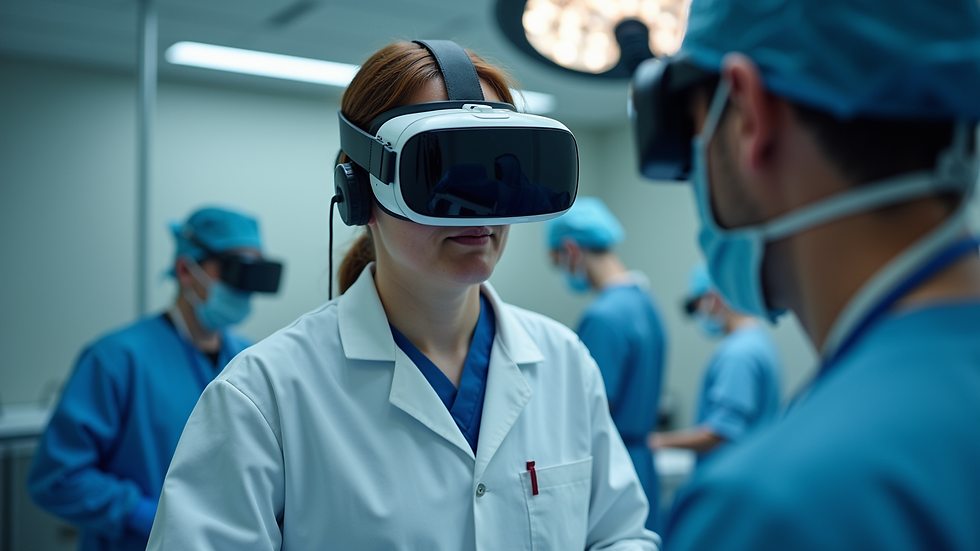
Virtual reality (VR) has been a buzzword for years, but in 2024, it is becoming more accessible and sophisticated for healthcare simulation. Immersive VR environments allow learners to practice complex procedures in a risk-free setting. For example, surgeons can rehearse intricate operations with realistic tactile feedback, while nurses can simulate emergency response scenarios that require quick decision-making.
The key advantage of VR is its ability to replicate rare or high-stakes situations that professionals might not encounter frequently but must be prepared for. This technology supports repeated practice, which is essential for skill retention and confidence building.
Actionable recommendation: Healthcare educators should consider integrating VR modules into their curricula, focusing on scenarios that are difficult to replicate in traditional training. Investing in VR headsets and compatible software can provide a scalable solution for ongoing professional development.
Simulation Tech Advancements 2024: AI-Driven Personalized Learning
Artificial intelligence (AI) is playing a growing role in customizing simulation experiences. AI algorithms analyze learner performance data to identify strengths and weaknesses, then adapt scenarios accordingly. This personalized approach ensures that each professional receives targeted practice where it is most needed.
For instance, an AI system might detect that a paramedic trainee struggles with airway management and then generate additional simulations focused on that skill. This dynamic feedback loop accelerates learning and helps avoid the one-size-fits-all approach that can limit training effectiveness.
Practical tip: Incorporate AI-powered simulation platforms that offer real-time analytics and adaptive learning paths. This will help maximize training efficiency and better prepare healthcare workers for diverse clinical challenges.
Enhanced Haptic Feedback for Realistic Skill Development
One of the most significant barriers to effective simulation has been the lack of realistic tactile sensations. In 2024, haptic technology has advanced to provide nuanced feedback that mimics the feel of human tissue, resistance, and instrument handling.
This improvement is crucial for procedures requiring fine motor skills, such as inserting IV lines, suturing, or palpating pulses. Enhanced haptics allow learners to develop muscle memory and precision without risking patient safety.
Example: A nurse practicing catheter insertion on a haptic-enabled simulator can feel the subtle resistance changes, improving their technique before performing on actual patients.

Integration of Augmented Reality for On-the-Spot Guidance
Augmented reality (AR) overlays digital information onto the real world, offering a powerful tool for simulation and live training. In 2024, AR is increasingly used to provide step-by-step guidance during procedures, enhancing both learning and performance.
For example, during a simulated cardiac arrest scenario, AR glasses can display vital signs, medication dosages, and procedural checklists in the user’s field of vision. This real-time support helps reduce cognitive load and improves adherence to protocols.
Recommendation: Explore AR applications that can be integrated into simulation labs or even clinical settings to support just-in-time training and decision-making.
Collaborative Simulation Platforms for Remote Learning
The pandemic accelerated the adoption of remote learning, and simulation technology has adapted accordingly. Cloud-based platforms now enable healthcare teams to participate in collaborative simulations from different locations.
These platforms support multi-user environments where doctors, nurses, and paramedics can interact in real time, practicing communication and teamwork skills essential for patient care. This trend is particularly valuable for continuing education and interprofessional training.
Actionable advice: Leverage cloud simulation tools to facilitate remote group training sessions. This approach can expand access to high-quality simulation experiences regardless of geographic constraints.
Looking Ahead: What These Trends Mean for Healthcare Training
The convergence of VR, AI, haptics, AR, and cloud technologies is creating a rich ecosystem for healthcare simulation. These tools are not only enhancing technical skills but also improving critical thinking, teamwork, and decision-making under pressure.
By embracing these simulation technology trends 2024, healthcare professionals can expect more engaging, effective, and personalized training experiences. This progress ultimately supports the goal of better patient outcomes through improved clinical competence.
I encourage educators and trainers to stay informed about these advancements and consider how to integrate them into their programs. The future of healthcare simulation is bright, and the innovations emerging this year are setting a new standard for excellence in professional development.
Simulation technology is evolving rapidly, and staying current with these trends is essential for anyone involved in healthcare education. By adopting these advancements, we can ensure that training remains relevant, impactful, and aligned with the demands of modern clinical practice.


Comments